How much does it cost to self-publish a book? It sounds like a simple question, but the honest answer is "it depends." One author spends $200 and uploads a file over a weekend. Another spends $15,000 on a full editorial team, a custom cover and a six-month ad campaign. Both are self-published, and both can be the right call for the author's goals.
For most first-time authors who want a book that looks and reads like it came from a real publisher, the realistic budget sits between $500 and $5,000. Where you land in that range comes down to three things: your goal for the book, how much work you do yourself, and which services you refuse to cut corners on.
This guide gives you a self publishing cost calculator you can use in about two minutes, then walks through every cost behind the number. You will see what editing, cover design, formatting, ISBNs, printing and marketing actually cost in 2026, which expenses are optional, and where the hidden costs show up. By the end, you will have a budget you can trust before you spend a single dollar.
Quick Answer: How Much Does It Cost to Self-Publish a Book?
Most authors spend between $500 and $5,000 to self-publish a professional-quality book. A bare-bones DIY launch can come in under $500, while a premium launch with full editing, a custom cover and paid marketing can pass $10,000. Editing and cover design make up the largest share of the budget in almost every case.
Here is a quick view of typical ranges for each cost category.
| Cost category | Low end | Mid range | High end |
|---|---|---|---|
| Editing | $200 | $800 | $3,000 |
| Cover design | $50 | $500 | $2,500 |
| Interior formatting | $0 | $150 | $500 |
| ISBN | $0 | $125 | $295 |
| Platform fees | $0 | $49 | $99+ |
| Marketing | $0 | $300 | $2,000+ |
| Website | $0 | $50 per year | $200 per year |
| Copyright registration | $0 | $65 | $65 |
| Typical total | $400 | $2,000 | $8,500+ |
A useful rule of thumb is the 80/20 rule: most of your book's perceived quality comes from two investments, editing and cover design. If money is tight, protect those two first and economize everywhere else.
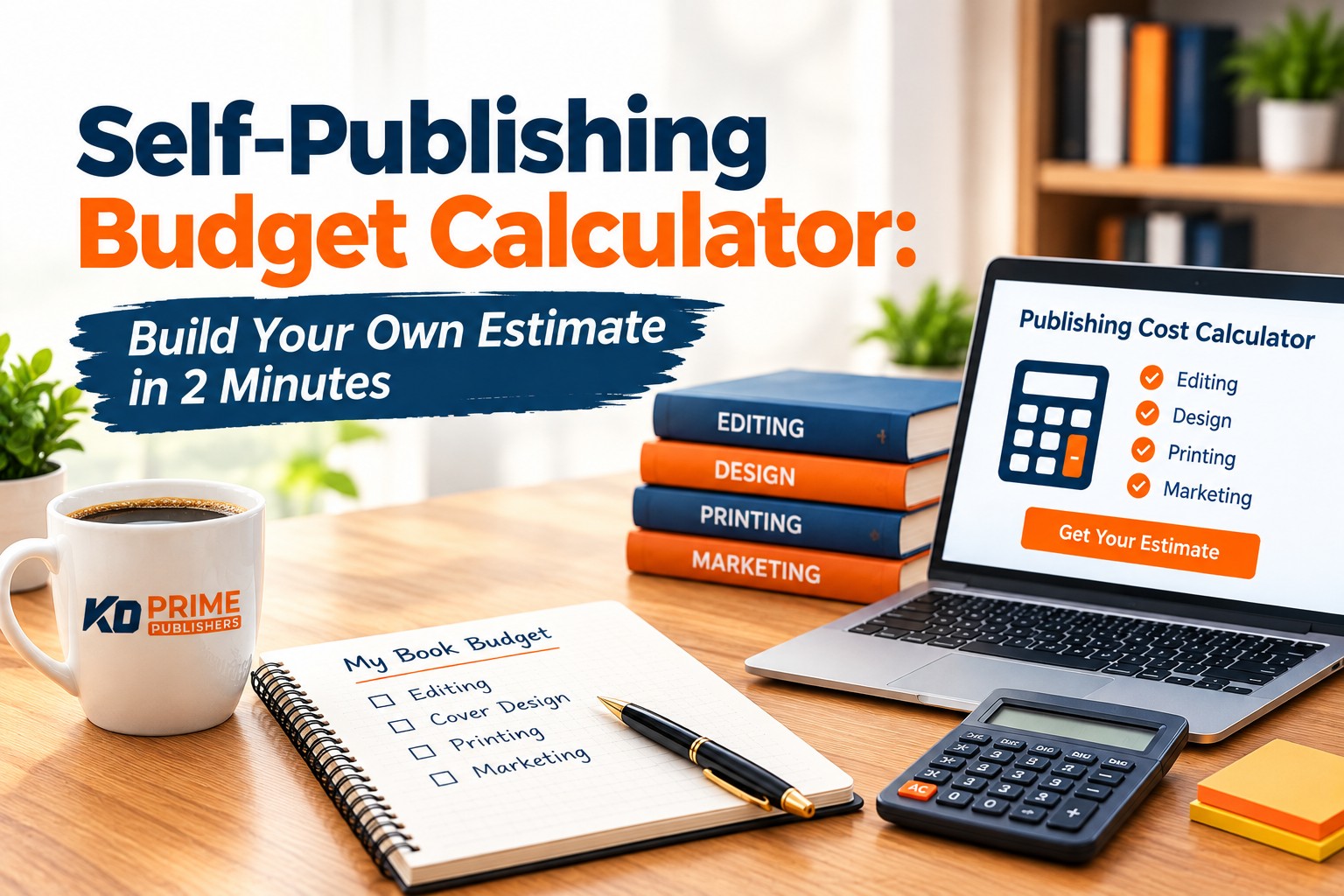
Self-Publishing Budget Calculator: Build Your Own Estimate in 2 Minutes
The fastest way to get a realistic number is to build it yourself. Use the calculator below to turn the ranges in this guide into a budget that fits your book.
How to use the calculator
- Choose your book type and length. Enter your word count or page count. Longer books cost more to edit, format and print.
- Toggle each service on or off. Switch on only what you plan to pay for. Anything you do yourself stays at zero.
- Pick a budget level. Select DIY, mid-range or premium for each service. The calculator uses current market ranges for each level.
- Read your total and break-even. You will see your estimated production cost and the number of copies you need to sell to earn it back.
What the calculator asks for
The calculator covers every cost a typical self-published book runs into:
- Book type: novel, nonfiction, memoir, children's book or cookbook
- Word count and page count
- Editing level: developmental editing, copy editing or proofreading
- Cover: DIY, premade or custom
- Formatting: free tool, paid software or a professional formatter
- ISBN: free platform ISBN, single purchase or a block of ten
- Print format: ebook, paperback or hardcover, in black and white or color
- Marketing budget for launch and the first few months
- Extras such as an audiobook, an author website, copyright registration and advance review copies
Sample estimate: a 60,000-word nonfiction paperback
To show how the numbers add up, here are three versions of the same book.
Bootstrap version (about $515). Proofreading only at $300, a premade cover at $200, a free formatting tool, a free platform ISBN and one proof copy at about $15. Marketing is organic and costs nothing.
Professional version (about $2,330). Copy editing at $900, a custom cover at $600, formatting software at $150, a purchased ISBN at $125, copyright registration at $65, a proof copy at $40, a $400 launch marketing budget and a basic author website at $50.
Premium version (about $7,000). Developmental editing plus copy editing at $2,400, a premium custom cover at $1,500, a professional formatter at $400, a block of ten ISBNs at $295, copyright registration at $65, advance review copies at $150, a $2,000 marketing campaign and a more complete website at $200.
The same manuscript can cost $515 or $7,000 depending on the choices you make. Neither number is wrong. The right one is the one that matches what you want the book to do for you.
Limits of any cost calculator
A calculator gives you an estimate, not a quote. Real prices change with your manuscript's condition, your genre, the freelancer or company you hire and how many revision rounds you need. Treat the result as a planning number, then request quotes for the services you want to buy. If you would rather skip the shopping, you can talk to KD Prime Publishers about a package built around your book.
Self-Publishing Costs Broken Down: What You Actually Pay For
When you self-publish, you take over the jobs a publishing house would normally handle: editing, design, production, distribution and marketing. Each one has a price, so let's go through them one at a time.
Editing: $200 to $3,000
Editing is almost always the largest single expense, and it is the one most authors regret skipping. There are three main levels, and most books need at least one of them.
Developmental editing looks at the big picture: structure, pacing, plot, argument and audience fit. It typically runs $800 to $3,000 depending on length and complexity. Copy editing fixes grammar, style, consistency and clarity line by line, and usually costs $500 to $1,500. Proofreading is the last pass that catches typos and formatting slips, generally $200 to $500.
Rates are usually based on word count, so a 90,000-word novel costs noticeably more to edit than a 40,000-word guide. If your budget is tight, run your manuscript past free beta readers first, then pay for a professional book editing pass at the level your draft needs. Readers forgive a lot, but they rarely forgive a book full of mistakes, and reviews will say so.
Book cover design: $50 to $2,500
Your cover is your most important marketing asset. It decides whether a browsing reader clicks or scrolls past, and it has to look right as a tiny thumbnail on a retail page.
You have three routes. DIY covers cost almost nothing but only work if you have real design skills. Premade covers run roughly $150 to $400 and are customized with your title and name, which makes them a smart middle option. A fully custom cover typically costs $500 to $2,500 and is designed from scratch for your book and genre. Budget freelance marketplaces sit below $150, but quality varies widely.
If you are aiming for a polished result that fits your genre's expectations, custom book cover design is usually worth the spend. Make sure your cover files come in every format you need, including paperback wrap, hardcover and ebook.
Interior formatting: $0 to $500
Formatting turns your manuscript into a clean, print-ready book with proper margins, headings, page numbers and an ebook file that reads well on every device.
Free tools can handle simple layouts. Paid software such as Atticus (about $147 one time) or Vellum (about $250 one time, Mac only) gives you more polished results with little effort. A professional formatter charges roughly $200 to $500 and is the best choice for books with complex layouts, images, tables or multiple trim sizes. If your book has any of those, professional book formatting can save you hours of troubleshooting upload errors.
ISBN and copyright: $0 to $415
An ISBN identifies your book for retailers and libraries. In the United States, ISBNs are sold through Bowker, and a single one costs about $125, while a block of ten runs about $295. If you publish more than one book, or more than one format, the block of ten is far cheaper per ISBN.
Many platforms offer a free ISBN, and that is fine for a first book. The tradeoff is that the platform is listed as the publisher of record and the ISBN may only work on that platform. If you want full control, or plan to distribute widely to bookstores and libraries, buy your own. Ebooks sold on Amazon do not require an ISBN.
Copyright registration is optional but smart. Your work is protected the moment you write it, yet registering with the US Copyright Office costs about $65 and strengthens your legal position if someone copies your book.
Printing and print on demand
Print on demand, often shortened to POD, means copies are printed only when someone orders them. You skip the bulk print run, the storage and the boxes of unsold books in your garage.
Per-copy costs depend on page count, trim size, paper and whether the interior is color. A typical 250-page black-and-white paperback costs about $3.50 to $5.00 to print through Amazon KDP, and you can check exact figures with the Amazon KDP printing cost and royalty calculator. Color interiors cost significantly more, which matters a lot for children's books and cookbooks. Plan on ordering a proof copy before you launch, and a handful of author copies for events, gifts and review requests.
Platform and distribution fees
The big self-publishing platforms do not charge to upload your book. They earn money by taking a share of each sale. Amazon KDP charges nothing upfront and takes a commission on sales. Draft2Digital charges nothing upfront and takes a percentage of each ebook sale.
IngramSpark, which reaches bookstores and libraries, has historically charged setup and revision fees per title. Check the current IngramSpark pricing page before you budget, since those numbers change. Subscription-based aggregators charge a flat fee instead of a commission, which can work out cheaper if you sell a lot.
Marketing and advertising: $0 to $2,000 or more
Publishing is the easy part. Getting readers to find and buy your book is the hard part, and for authors who want revenue, marketing quickly becomes the biggest ongoing cost.
Amazon Ads typically start at $5 to $10 per day. Facebook and Instagram ads usually run $100 to $500 per month and work well for building an email list. Newsletter promotions run about $20 to $200 each, and a BookBub featured deal can cost $200 to $2,000 with no guarantee of acceptance. Organic marketing, such as social posts, a launch team and outreach to reviewers, costs time instead of money.
If you would rather hand this off, professional book marketing services can build a launch plan around your genre, audience and budget.
Self-Publishing Budget Tiers: Bootstrap, Professional and Premium
Most authors fall into one of three spending tiers. Knowing which one fits your goal keeps your expectations realistic.
Bootstrap: $500 to $1,500. This tier suits authors who mainly want to get the book out there, share a story with family or test the waters. You will probably use proofreading only, a premade cover, a free formatting tool and a free ISBN, with organic marketing. The tradeoff is that your book competes with far more polished titles, so expect modest sales.
Professional: $2,000 to $5,000. This is where most serious first-time authors land, especially those building credibility for a business, speaking career or platform. It typically includes copy editing plus proofreading, a custom cover, quality formatting, your own ISBN and a modest launch budget of $300 to $1,000. Your book looks and reads like it came from a traditional house.
Premium: $5,000 to $15,000. This tier is for authors who want the book to make money or anchor a brand. It adds developmental editing, a premium cover, professional formatting, a larger ad budget and extras such as an audiobook. It is the right fit when the book is a business asset and you have a plan to earn the money back.
The most common mistake is paying for the Bootstrap tier while expecting Premium results. A book with no editor, a weak cover and no marketing plan will stay invisible no matter how good the story is. Match your budget to your honest goal, and your spending becomes strategic instead of hopeful.
Hidden and Ongoing Costs Most Authors Miss
The line items above cover production, but a few costs tend to show up later and catch first-time authors off guard.
Revisions and re-uploads. Fixing a typo after launch can cost money on some platforms, and cover or interior changes may mean new files and new fees.
Author copies and shipping. Buying copies for events, gifts and reviewers adds up, and so does postage.
Taxes. Royalties are income. In the United States, self-employed authors owe income and self-employment tax, so set aside part of every payout.
Website and email tools. A domain, hosting and an email service typically run $50 to $200 per year, and they pay off by letting you reach readers directly. An author website is also where you collect emails and sell direct.
Continuing ad spend. Most ad campaigns need tuning and a steady budget to keep working. Plan for months, not days.
Add-ons and new editions. An audiobook, a translation or a revised edition can cost $1,000 or more each. Build a rough buffer of 10 to 15 percent into your budget so surprises do not stall your launch.
Self-Publishing Cost by Book Type
The type of book you write changes the budget more than most authors expect.
Novels and fiction. Length drives the price. A long fantasy novel costs far more to edit than a short thriller, and genre fiction readers expect polished covers that match genre conventions. Developmental editing is especially valuable for first novels.
Nonfiction and business books. Expect extra costs for fact-checking, an index, charts or diagrams and sometimes a permissions fee for quotes or images. Business authors often add a website and speaking materials.
Memoirs. Memoirs benefit from developmental editing because shaping real life into a story is hard. Authors who struggle to write the manuscript sometimes hire a ghostwriter, which is a major cost that can reach $10,000 or more depending on length and experience.
Children's books. Illustration is the largest expense, and full-color printing raises the per-copy cost. A picture book with a dozen or more illustrated spreads can cost several thousand dollars before editing or printing. Plan the illustrator, the page count and the print format together.
Cookbooks and photo books. Color interiors, food or art photography and complex layouts push up both formatting and printing costs. Print costs per copy can be several times higher than a text-only paperback, which affects your retail price and profit.
How to Lower Your Self-Publishing Costs Without Hurting Quality
You can reduce spending a great deal without hurting the finished book, as long as you cut in the right places.
Save on formatting. Free tools or a one-time software purchase handle most standard books. Reserve a professional formatter for complicated layouts.
Use free ISBNs for a first book. If you do not need bookstore distribution right away, a platform ISBN is a reasonable starting point.
Buy premade, not custom. A well-chosen premade cover from a skilled designer costs a fraction of a custom one and can look excellent.
Use beta readers. A group of readers who know your genre will catch structural problems for free before you pay an editor.
Market organically first. Build an email list, ask for early reviews and use social channels before you pay for ads.
Compare bundles to a la carte. Buying services one at a time often costs more in time and coordination than a bundled package, particularly when an error in one service breaks another.
Where should you never cut? Editing and cover design. A clean manuscript and a strong cover are the two things readers judge first. Remember, too, that doing everything yourself has a price in time. You can spend weeks learning formatting, hours fixing upload errors and days working out why your book is not showing up on a retail page. For some authors that time is worth saving, and for others it is not.
Break-Even and Royalties: When Does Self-Publishing Pay Off?
Cost only matters next to what you earn. The break-even formula is simple: divide your total production cost by your royalty per sale.
Here is an example. Say a 250-page paperback is listed at $14.99, costs about $4.45 to print and earns you roughly $4.55 per sale on KDP. If your production cost was $2,000, you need about 440 sales to recover it. Ebooks usually earn more per sale because there is no printing cost, so a book sold in both formats breaks even faster.
Royalty rates vary by platform and format, so run the numbers with each retailer's own calculator before you set your price. Self-publishing royalties are often far higher than the 10 to 15 percent typical of traditional deals, which is the main financial reason authors choose it. The tradeoff is that you carry the upfront cost and the marketing work, with no advance to cover either.
Set a realistic expectation before you publish. Many self-published books sell modestly, and the authors who earn the most treat the book as the start of a longer plan: more books, a growing email list and consistent marketing. If your book supports a business or a speaking career, the return may come from clients and credibility rather than direct sales.
When to Hire a Self-Publishing Service
Going fully DIY is possible, but it is not always the cheapest path once your time and mistakes are counted. A professional team starts to make sense when:
- You are unsure how to format files for print and ebook platforms
- You want one point of contact instead of juggling five freelancers
- You have a launch date and cannot afford upload errors or missed deadlines
- You need marketing that is planned, not improvised
When comparing providers, ask for a clear list of what each package includes, who owns the rights and files, how many revision rounds you get and what the total cost is, including any add-ons. Be cautious about vague pricing, pressure to buy quickly or any company that takes your rights. A trustworthy service keeps you in control of your book.
If you want a team that handles editing, design, formatting, distribution and marketing in one place, KD Prime Publishers offers self-publishing services for authors across the USA, and you can request a quote based on your own budget and goals.
Frequently Asked Questions
How much does it cost to self-publish a book?
Most authors spend $500 to $5,000 for a professional-quality book. A DIY launch can cost under $500, while a premium launch with full editing, a custom cover and paid marketing can exceed $10,000. Your goal and how much work you do yourself decide where you land.
What is the cheapest way to self-publish a book?
The cheapest route is to do the work yourself and use free tools. Format with a free template, design a simple cover, use a free platform ISBN and publish through a platform with no upfront fees. You can launch for under $200, but without an editor or a professional cover, quality and sales will usually suffer.
Can I self-publish a book for free?
Yes, technically. Platforms like Amazon KDP charge nothing to upload, and print on demand means you never pay for inventory. You still pay in time, and a free book often lacks professional editing and design. Most authors who want sales end up spending something on both.
How much does it cost to self-publish a 100-page book?
A short book is cheaper because editing and formatting scale with length. Expect roughly $300 to $1,500 for a 100-page book with proofreading, a premade or custom cover and basic formatting. Color interiors or illustrations raise the price quickly, especially for children's books.
Do I need an ISBN to self-publish?
You need an ISBN for print books if you want bookstore and library distribution. Ebooks on Amazon do not require one. You can use a free platform ISBN or buy your own. In the United States, a single ISBN costs about $125 and ten cost about $295.
How much does Amazon KDP cost to publish a book?
Publishing on Amazon KDP is free to upload. Amazon takes a share of each sale, and for paperbacks it also deducts the print cost. A typical 250-page black-and-white paperback costs about $3.50 to $5.00 to print, which comes out of your royalty.
Is self-publishing worth the money?
It can be, if your budget matches your goal. Self-publishing gives you creative control and much higher royalties than traditional deals, but you carry the upfront cost and the marketing work. Authors who plan a launch, invest in editing and cover design and keep marketing tend to see the best return.
How much do self-published authors make?
Earnings vary enormously. Many authors earn modest amounts from a single book, while those with several titles, a strong email list and steady marketing can earn a full-time income. Use the break-even formula in this guide to see how many sales you need to cover your costs.
Conclusion
Self-publishing is not free, but it does not have to be expensive. A realistic budget for a professional first book falls between $2,000 and $5,000, a lean version can cost much less, and a premium launch can cost much more. What matters most is matching your spending to your goal and protecting the two investments readers notice first: editing and the cover.
Use the self publishing cost calculator above to build your own estimate, then test it against real quotes. Plan for hidden costs, work out your break-even point and decide where your money and time are best spent. If you want expert help turning a manuscript into a finished, market-ready book, request a custom quote from KD Prime Publishers and start with a budget that fits your goals.
 DMCA
Disclaimer
